
Déclencheurs et Prévention de la Rechute : Plan Personnalisé
À propos de cet outil
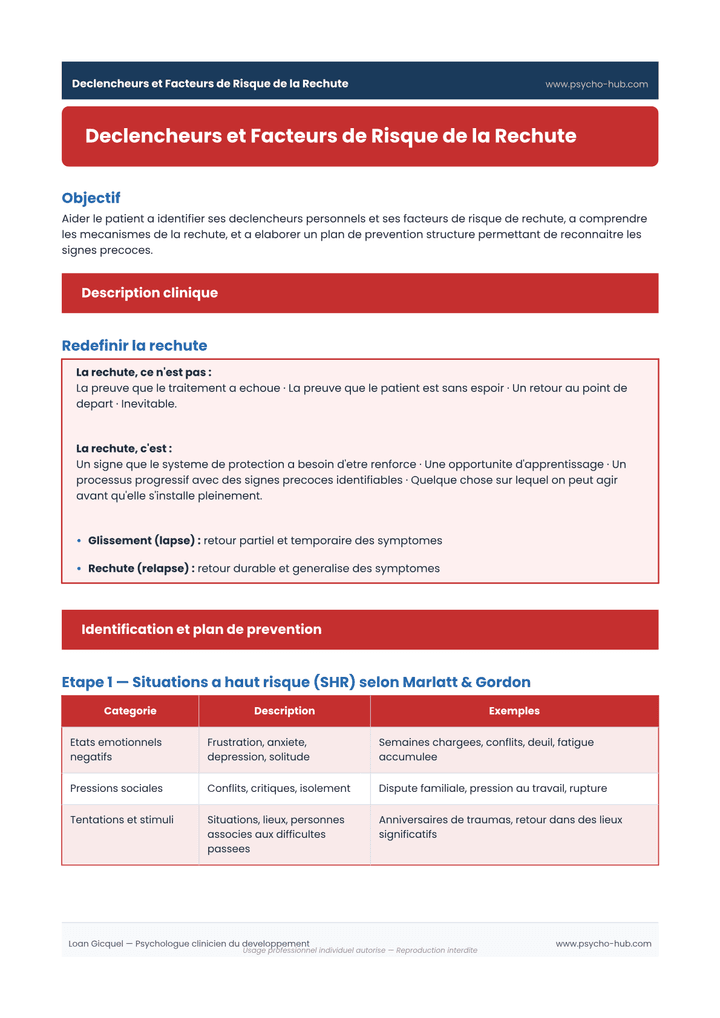
« Déclencheurs et Prévention de la Rechute : Plan Personnalisé » est un outil thérapeutique de la bibliothèque PsychoHub, dans la catégorie « exercice ou outil pour le patient », rédigé et validé par Loan Gicquel, psychologue clinicien. Il accompagne la prise en charge clinique de Dépression, Anxiété Généralisée, Addictions, TCA, ESPT, Stress. Il s'adresse aux populations suivantes : Adolescents (13-17 ans), Adultes (18-65 ans), Tous les âges. Il mobilise les approches TCC, Pleine conscience. Outil structuré en 4 étapes pour identifier les situations à haut risque, repérer les signes précoces d’alerte, comprendre les facteurs de vulnérabilité et construire un plan de prévention à 4 niveaux, applicable à la dépression, l’anxiété et les addictions. Le support est fourni au format PDF (3 pages), téléchargeable par les membres de PsychoHub. Il s'appuie sur des références scientifiques validées.
Population cible
Rejoignez les psychologues qui construisent leur pratique avec PsychoHub
Accédez à l'ensemble de la bibliothèque (protocoles, échelles, fiches psychoéducatives), rédigés et validés par Loan Gicquel, psychologue clinicien.
Veille scientifique gratuite · sans engagement
Sources scientifiques
Articles scientifiques liés
Lien entre lipides plasmatiques et idées suicidaires dans les troubles bipolaires : étude de cohorte FACE-BD
décembre 2026
Efficacité de la thérapie cognitivo-comportementale pour le syndrome de fatigue chronique : une revue systématique et une méta-analyse
octobre 2026
De la page à la scène : un essai contrôlé randomisé sur les ateliers de lecture théâtralisée pour personnes âgées atteintes de troubles neurocognitifs
octobre 2026
Neurofeedback guidé par spectroscopie proche infrarouge fonctionnelle combiné à l’art-thérapie et à la thérapie cognitive et comportementale pour la dépression post-AVC : un essai contrôlé randomisé.
juillet 2026
Questions fréquentes
Quels troubles psychologiques cible l'outil « Déclencheurs et Prévention de la Rechute : Plan Personnalisé » ?
L'outil « Déclencheurs et Prévention de la Rechute : Plan Personnalisé » est conçu pour la prise en charge clinique des troubles suivants : Dépression, Anxiété Généralisée, Addictions, TCA, ESPT, Stress. Il fait partie de la bibliothèque PsychoHub d'outils thérapeutiques rédigés et validés par Loan Gicquel, psychologue clinicien.
Quelles approches thérapeutiques utilise l'outil « Déclencheurs et Prévention de la Rechute : Plan Personnalisé » ?
L'outil « Déclencheurs et Prévention de la Rechute : Plan Personnalisé » s'inscrit dans les approches thérapeutiques suivantes : TCC, Pleine conscience. Chaque outil PsychoHub est sélectionné et validé par un psychologue clinicien pour garantir sa cohérence avec les pratiques cliniques contemporaines.
À quelle population s'adresse l'outil « Déclencheurs et Prévention de la Rechute : Plan Personnalisé » ?
L'outil « Déclencheurs et Prévention de la Rechute : Plan Personnalisé » est conçu pour les populations suivantes : Adolescents (13-17 ans), Adultes (18-65 ans), Tous les âges. Le contenu et le niveau de langage sont adaptés à chaque tranche d'âge.
Quel type d'outil est « Déclencheurs et Prévention de la Rechute : Plan Personnalisé » ?
« Déclencheurs et Prévention de la Rechute : Plan Personnalisé » est un support de type exercice ou outil pour le patient. PsychoHub regroupe 6 types d'outils thérapeutiques : exercices et outils patients, fiches psychoéducatives, ressources pour les parents, guides praticien, supports visuels et échelles/questionnaires, tous accessibles sous forme de PDF téléchargeables.
Combien de pages contient le PDF « Déclencheurs et Prévention de la Rechute : Plan Personnalisé » ?
Le PDF « Déclencheurs et Prévention de la Rechute : Plan Personnalisé » contient 3 pages, téléchargeable au format PDF après connexion à votre compte PsychoHub.
Comment télécharger l'outil « Déclencheurs et Prévention de la Rechute : Plan Personnalisé » ?
L'outil « Déclencheurs et Prévention de la Rechute : Plan Personnalisé » est réservé aux membres PsychoHub. Après inscription à 14,90 € HT/mois (tarif fondateur, 100 premiers inscrits) ou 29,90 € HT/mois (tarif standard), le PDF est téléchargeable depuis votre compte. Hébergement Europe, conformité RGPD.
Outils similaires
Signaux d’Alerte du Burn-out : Checklist de dépistage précoce
Checklist de dépistage du burn-out en trois catégories (physiques, émotionnels/cognitifs, comportementaux) permettant au patient adulte d’identifier les précurseurs avant l’effondrement et de définir ses trois actions de prévention prioritaires.
Mes Personnes Ressources : Carte de soutien personnalisée
Outil structuré en 5 étapes pour cartographier le réseau de soutien du patient (personnes ressources et ressources professionnelles), identifier les obstacles à la demande d’aide et pratiquer l’assertivité de soutien dans le cadre de la prévention de la rechute.
Plan d’Action Anti-Stress : Structurer une réponse efficace
Outil pratique adulte pour analyser un stresseur identifié, évaluer son degré de contrôle (modifiable / partiellement / non modifiable) et planifier une réponse structurée avec actions concrètes, responsables, échéances et résultats attendus.
RPS, Préventions et Solutions : les 3 niveaux d’intervention
Présente les stratégies de prévention des risques psychosociaux aux trois niveaux (primaire, secondaire, tertiaire), avec des ressources concrètes pour accompagner le patient en souffrance au travail.
Plan de Crise Alimentaire : Agir avant, pendant et après une envie de crise
Plan de crise structuré en trois temps (avant, pendant, après) pour les patients souffrant de troubles alimentaires compulsifs, permettant d’identifier les signaux d’alarme, de préparer des alternatives à la crise et de favoriser l’auto-bienveillance post-crise.
Activation Comportementale : Protocole Complet
Protocole d’activation comportementale permettant de rompre le cercle vicieux inactivité-dépression en réintroduisant progressivement des activités structurées, avec tableau de monitoring humeur-activités et tableau de planification.
Plan de Gestion du Meltdown : Crises de surcharge TSA
Plan de crise personnalisé destiné aux personnes TSA (enfants, adolescents) et à leur entourage, permettant d’identifier les signaux d’alarme précoces, les stratégies d’apaisement sensoriel et les conduites à tenir pendant et après une crise de surcharge.
Plan de Gestion des Crises : Fiche D Livret TOP
Fiche de plan de crise à compléter à tête reposée pour les parents d’enfants avec TOP, permettant d’identifier les signaux d’alarme personnels, de préparer les phrases et actions régulatrices à utiliser pendant la crise, et de planifier le retour au calme.